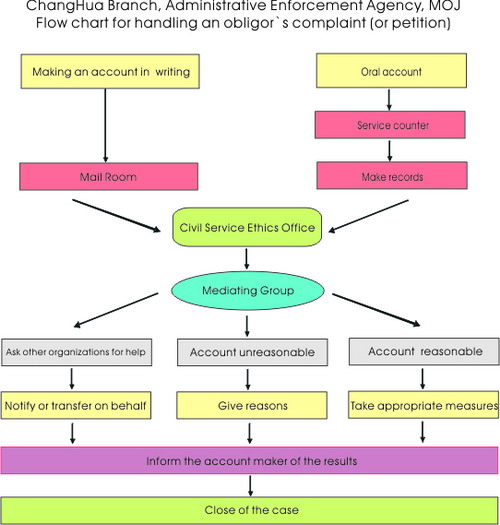
Flow chart for handling execution cases



- Publication Date :
- Last updated:2026-06-03
- View count:5375
A: Simplified flow chart for handling execution cases
1. Transfer the case to this office and distribute it to the concerned section.
2. Examine the legal conditions for execution by concerned sections and notify the obligor to make the payment.
3. Check on the obligor's property for compulsory execution if he or she fails to make the payment within the prescribed time.
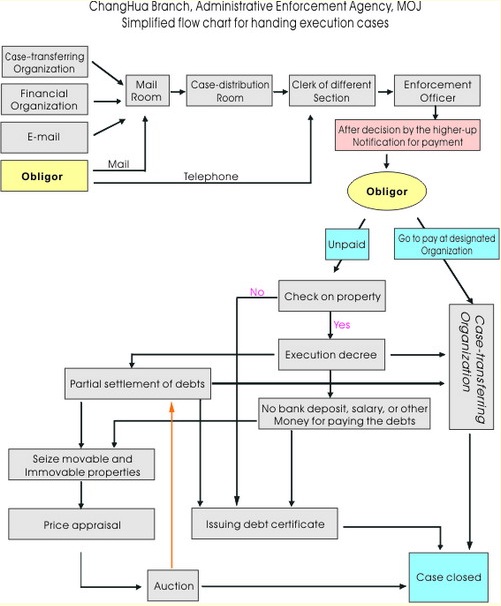
B: Simplified disposal of objection claims
1. After an obligor's objection claim is received, it is sent to the section in charge.
2. The clerk makes a report on the execution for submission to the enforcement officer to make an opinion paper for approval by the director of this office.
3. If the objection claim is reasonable, the execution is supposed to be stopped, and the executed portion should be nullified or corrected as well. If the objection claim is unreasonable, the objection claim, together with the report and opinion paper, is submitted to the Administrative Enforcement Agency for decision.
4. If the Administrative Enforcement Agency decides that the objection claim is reasonable, this office stops the execution in accordance with the decision and nullifies or corrects the executed portion of the case. If the Administrative Enforcement Agency rejects the claim, the execution is continued.
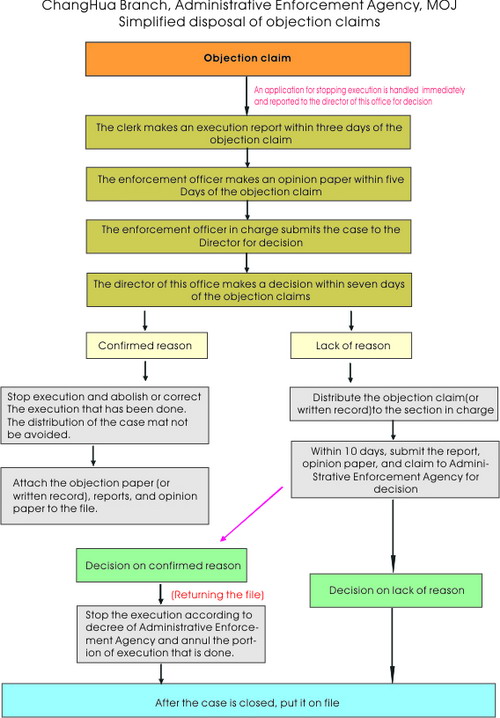
C: Flow chart for handling an obligor's complaint or petition
1. When an obligor comes to this office to make an oral account of this case, the volunteer worker at the reception desk asks about his status and his case, records the information in the registry, and informs the Civil Service Ethics Office for disposal.
2. If the obligor presents his case in writing, after the registration by the official in charge, the case is referred to the Civil Service Ethics Office for further handling.
3. After being aware of the case preliminarily, the Civil Service Ethics Office then meets with the mediating group according to the sort of case or coordinates with related divisions to deal with it appropriately.
4. The obligor is informed about the decision on the case either orally or in writing.
5. All individual cases are recorded separately for submission and reference.